Permaculture Farms in Indonesia: Where Sustainable Living Meets Adventure
Indonesia's agricultural landscape is changing. While industrial farming dominates much of the world, a quiet movement of permaculture farms across the Indonesian archipelago is proving that there's another way — one that works with nature rather than against it, produces abundance without destruction, and offers travelers experiences impossible to find in conventional tourism.
If you've ever searched for a farm in Indonesia that combines ecological principles with genuine hospitality, this guide explores what permaculture farms offer and why they're becoming destinations in their own right.
What Is Permaculture (And Why Should You Care)?
Permaculture — short for "permanent agriculture" or "permanent culture" — is a design philosophy based on observing natural ecosystems and applying those patterns to human systems. It's not just farming; it's a way of thinking about how humans can live sustainably on Earth.
Core Principles
Observe and interact: Before changing anything, spend time understanding what's already there. What grows naturally? Where does water flow? What do the animals do?
Catch and store energy: Water, sunlight, organic matter — capture these resources when abundant for use when scarce.
Obtain a yield: This isn't just philosophical — you need to produce food, fuel, fiber, or income to sustain the system.
Apply self-regulation: Design systems that don't need constant intervention. Let nature do the work.
Use renewable resources: Prefer resources that regenerate over those that deplete.
Produce no waste: "Waste" in one system becomes input for another. Chicken manure feeds gardens. Kitchen scraps feed chickens.
Design from patterns to details: Understand the big picture before getting lost in specifics.
Integrate rather than segregate: Elements that work together are stronger than elements in isolation.
Use small and slow solutions: Smaller systems are easier to maintain and understand. Slow growth is sustainable growth.
Use and value diversity: Monocultures are fragile. Diverse systems are resilient.
Why This Matters for Travelers
If you're seeking a farm in Indonesia for more than just a pretty backdrop, permaculture farms offer something unique: functioning ecosystems you can participate in.
Unlike conventional farms where visitors are kept separate from operations, permaculture farms often welcome engagement. The whole philosophy is about connection — between species, between systems, between people and land.
Permaculture Farms Across Indonesia
While industrial agriculture dominates Java and Sumatra, permaculture projects are sprouting across the archipelago:
Bali
The most developed permaculture scene, with farms ranging from small family operations to educational centers. Many focus on rice cultivation, tropical fruits, and agroforestry. The tourism infrastructure means many farms offer courses, stays, and experiences.
Lombok
Less developed than Bali but growing. South Lombok in particular has emerging permaculture projects taking advantage of the drier climate and stunning landscapes. Farms here often integrate with the local Sasak culture.
Java
Some pioneering permaculture projects exist, particularly in the highlands of West and East Java. These often focus on coffee, vegetables, and reforestation.
Eastern Islands
Flores, Sumba, and the Nusa Tenggara islands have small-scale permaculture emerging, often tied to community development and conservation efforts.
What Makes Mawun Valley Different
At Mawun Valley Farm in South Lombok, we've been developing a permaculture system since the farm's founding. Here's what that looks like in practice:
Integrated Animal Systems
Our goats (Coconut, Spinach, Kangkung, and friends) aren't just cute — they're essential to the farm's ecology:
- They eat vegetation that would otherwise require cutting
- Their manure fertilizes gardens and fruit trees
- They manage areas difficult to maintain otherwise
- They provide companionship and entertainment
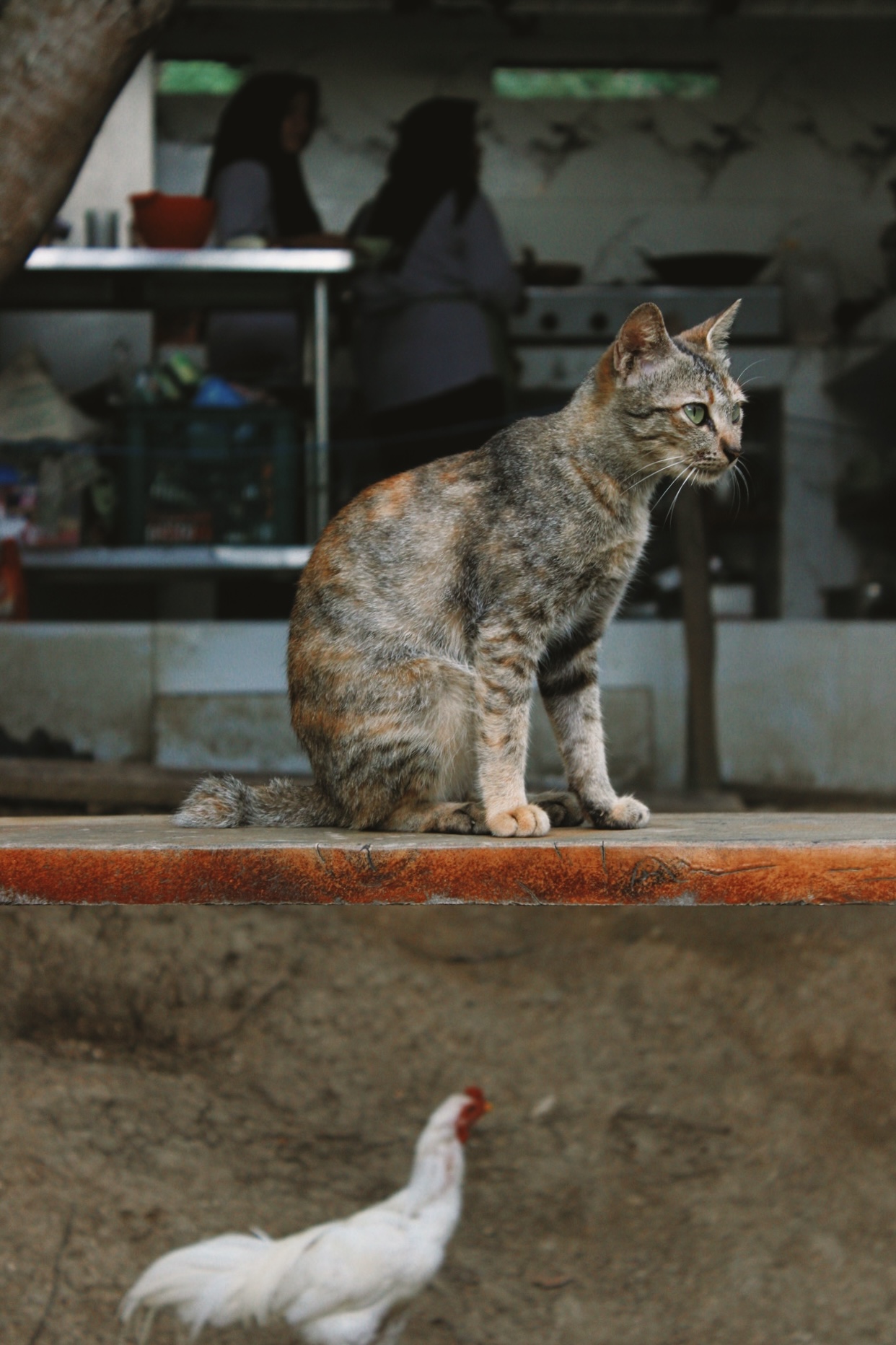
The chickens serve similar multiple functions:
- Eggs for the café and guests
- Pest control (they eat insects and grubs)
- Manure for composting
- Soil cultivation (scratching aerates the ground)
Water-Wise Design
South Lombok has a pronounced dry season. Our design accounts for this:
- Swales and berms capture rainwater during wet season
- Mulching reduces evaporation
- Shade structures protect sensitive plants
- Drought-tolerant species form the backbone of plantings
Food Forest Development
Rather than traditional row gardens (high maintenance, high input), we're developing food forests:
- Upper canopy: Fruit trees (cashew, coconut, mango)
- Middle layer: Smaller fruit trees (papaya, citrus, banana)
- Shrub layer: Productive shrubs (cassava, peppers)
- Ground layer: Vegetables, herbs, groundcovers
- Vine layer: Passion fruit, climbing beans
This mimics natural forest structure while producing food at every level.
Closed Loop Systems
We aim to minimize external inputs:
- Kitchen scraps feed animals or compost
- Animal manure feeds gardens
- Garden produces food for kitchen and café
- Fallen leaves become mulch
- Rainwater gets captured and stored
What You Can Learn Here
A stay at a permaculture farm in Indonesia isn't passive tourism. For those interested, there's knowledge to acquire:
Practical Skills
Composting: Different methods for different situations. Hot composting vs. cold. How to know when it's ready. What to include, what to avoid.
Tropical plant care: Which vegetables grow in this climate (hint: not the same ones as temperate zones). Dealing with tropical pests naturally. Understanding seasons.
Animal husbandry: Basic goat and chicken care. What healthy animals look like. How to integrate animals into a farm system.
Water management: Swales, berms, mulching, drip irrigation. How to make the most of seasonal rainfall.
Seed saving: Collecting and storing seeds from your best plants. Maintaining genetic diversity.
Design Thinking
Beyond specific skills, permaculture teaches a way of thinking:
- Looking for connections rather than isolated elements
- Asking "how can this solve multiple problems?"
- Designing for minimum maintenance
- Thinking in cycles rather than lines
- Valuing observation over intervention
Ecological Understanding
Time on a working farm teaches things books can't:
- How soil actually works
- What "biodiversity" feels like
- Why industrial agriculture is problematic
- What "sustainable" really means
- How much work food production requires
Stay and Contribute: Deeper Engagement
For those wanting more than a brief visit, our Stay & Contribute program offers extended engagement with the farm:
What It Includes
- Longer stays at reduced rates
- Meaningful participation in farm projects
- Deeper learning opportunities
- Integration into the farm community
- Flexibility to balance farm time with exploration
Who It's For
This isn't for everyone. It works best for people who:
- Want to learn practical sustainable living skills
- Enjoy physical outdoor activity
- Are comfortable with simple accommodation
- Value community over privacy
- Have flexibility in their schedules
- Genuinely want to contribute, not just observe
What You'll Do
Depending on your interests and the farm's needs:
- Garden development and maintenance
- Animal care routines
- Building and construction projects
- Harvest and food processing
- Whatever needs doing that day
The work isn't assigned like a job — it emerges from the farm's needs and your interests.
The Bigger Picture: Why Permaculture Farms Matter
Beyond personal experience, supporting permaculture farms in Indonesia contributes to something larger:
Environmental Impact
Every hectare under permaculture is a hectare not under chemical agriculture. These farms:
- Build soil instead of depleting it
- Increase biodiversity
- Sequester carbon
- Protect water quality
- Model alternatives to industrial farming
Cultural Preservation
Permaculture often integrates traditional practices:
- Indigenous seed varieties
- Traditional farming techniques
- Local ecological knowledge
- Community-based agriculture
Economic Alternatives
Small permaculture farms prove that agriculture can be economically viable without scale and chemicals:
- Direct relationship between producer and consumer
- Premium prices for quality produce
- Farm tourism as income stream
- Reduced input costs
Knowledge Spreading
Every visitor who learns permaculture principles carries that knowledge forward:
- Starting gardens at home
- Making different consumer choices
- Influencing others
- Maybe starting their own projects
Planning Your Visit
Best Times
Dry season (May-October): Easier for outdoor activities, better beach weather. Some water stress on gardens.
Wet season (November-April): Lusher gardens, more dramatic landscapes. Afternoon rains, fewer tourists.
Harvest seasons: Cashew (August-December) offers our signature jam-making experience. Different fruits and vegetables peak at different times.
How Long to Stay
2-3 nights: Taste of farm life. Understand the basics. Enjoy the food and atmosphere.
1 week: Settle into the rhythm. Learn specific skills. Form connections with people and place.
2-4 weeks: Through our Stay & Contribute program, really integrate. Complete projects. See changes in the garden over time.
Longer: For the right person, we're open to extended arrangements. Ask us.
What to Expect
Accommodation: Simple but comfortable. No air conditioning (fans are sufficient). Shared or private options.
Food: Farm-fresh meals at Noni's Café. Vegetarian-friendly. Locally sourced.
Atmosphere: Relaxed, community-oriented. Not a party scene. Early mornings, early nights.
Learning: As much or as little as you want. We share knowledge but don't pressure guests.
Is This Trip for You?
Consider a permaculture farm in Indonesia if you:
- ✓ Are curious about sustainable living
- ✓ Enjoy learning new skills
- ✓ Appreciate simplicity over luxury
- ✓ Want authentic cultural experiences
- ✓ Care about environmental impact
- ✓ Like being active and outdoors
- ✓ Value community connection
- ✓ Have flexibility in your plans
Consider something else if you:
- ✗ Need constant entertainment
- ✗ Require luxury amenities
- ✗ Dislike early mornings
- ✗ Are uncomfortable with animals
- ✗ Want total privacy
- ✗ Expect hotel-style service
Start Your Journey
The permaculture movement in Indonesia is growing, and there's never been a better time to experience it firsthand. Whether you're a weekend visitor or a long-term learner, farms like ours offer something commercial tourism can't: real engagement with sustainable systems that work.
At Mawun Valley Farm, we welcome guests of all backgrounds and commitment levels. Come for a meal at Noni's, stay for a night, extend for a week, or join our Stay & Contribute community for deeper immersion.
The farm is here. The knowledge is waiting. The question is: are you ready to dig in?
Contact us on WhatsApp to learn more.
Related reading: Farm Life Culture in Lombok • Slow Travel Lombok Guide
Experience Mawun Valley
Book your stay and discover the magic for yourself.