
South Lombok isn't just about beaches and surf breaks — it's home to one of Indonesia's most fascinating cultures. The Sasak people have inhabited Lombok for over a thousand years, developing traditions, crafts, and a way of life that remains vibrant today.
At Mawun Valley Farm, we're embedded in this culture. Our neighbors are Sasak farmers. Our team members share their traditions with curious guests. And our daily rhythm follows patterns that have shaped this land for generations.
This guide explores what makes Sasak culture special and how you can experience it authentically.
Understanding Sasak Culture
Who Are the Sasak People?
The Sasak are the indigenous people of Lombok, comprising about 85% of the island's population. Their civilization predates many Indonesian kingdoms, with evidence of settlement going back over 1,000 years.
Key characteristics:
- Religion: Predominantly Muslim (introduced in the 16th century), blended with earlier animist traditions
- Language: Sasak language, with different dialects across the island
- Economy: Traditionally agricultural — rice, tobacco, and various crops
- Social structure: Village-based, with strong community bonds
Wetu Telu: Unique Island Islam
Many Sasak follow Wetu Telu — a syncretic blend of Islam with Hindu-Buddhist and animist traditions. This produces unique practices:
- Some pray three times daily (not five)
- Ancestor veneration continues alongside Islamic practice
- Traditional ceremonies incorporate both influences
- Sacred sites blend religious traditions
While orthodox Islam has grown stronger in recent decades, Wetu Telu traditions persist, especially in rural South Lombok.
Traditional Sasak Villages
Sade Village
📍 20 minutes from Mawun Valley Farm
The most visited traditional village, Sade offers an accessible introduction to Sasak architecture and crafts.
What you'll see:
- Traditional lumbung houses (distinctive sloped roofs)
- Women weaving ikat and songket textiles
- Rice barns that double as architectural art
- Preserved building techniques using no nails
Experience tips:
- A local guide is essential (small fee, well worth it)
- Best visited morning for cooler temperatures
- Weaving demonstrations happen throughout the day
- You'll be invited to buy textiles (no obligation, but quality is good)
Ende Village
📍 25 minutes from the farm
Smaller and less touristed than Sade, Ende offers a more intimate experience.
What makes it special:
- Fewer visitors means less commercial pressure
- More time with individual artisans
- Quieter, more reflective atmosphere
- Similar architecture and crafts to Sade
Visiting Respectfully
When visiting traditional villages:
- Dress modestly (covered shoulders and knees)
- Ask permission before photographing people
- Accept offered drinks (usually tea) — refusing is impolite
- Hire local guides — they need the income and provide context
- Purchase something if you've received a demonstration
- Remove shoes when entering homes if invited
Traditional Sasak Crafts
Ikat and Songket Weaving
Lombok's handwoven textiles are renowned throughout Indonesia.
Ikat technique:
- Threads are tie-dyed before weaving
- Creates distinctive blurred patterns
- Takes weeks or months per piece
- Traditionally uses natural dyes
Songket technique:
- Supplementary weft weaving
- Gold or silver threads create raised patterns
- Extremely time-intensive
- Reserved for special occasions and ceremonies
Where to see weaving:
- Traditional villages (Sade, Ende)
- Markets in Praya and Mataram
- Individual artisans (ask us for introductions)
What to know before buying:
- Handmade vs. machine-made affects price dramatically
- Natural dyes vs. synthetic (natural is rarer and more expensive)
- Quality weaving takes months — prices reflect this
- Bargaining is expected but stay respectful
Pottery
Sasak pottery continues traditions thousands of years old.
Banyumulek village (near Mataram) is the pottery center:
- Hand-built without wheels
- Burnished with stones for smooth finish
- Traditional and contemporary designs
- Working studios you can visit
Bamboo Crafts
Bamboo is everywhere in Sasak life:
- Baskets and containers
- Musical instruments
- Building materials
- Kitchen tools
Farm Life Rhythms
Daily Life at Mawun Valley
At the farm, you'll experience rhythms that echo Sasak agricultural life:
5:30-6:00 AM: Wake with roosters
- First light in the hills
- Animals stirring
- Cool morning air
6:30-8:00 AM: Morning activity
- Breakfast prepared
- Farm animals fed
- Garden work in cool hours
8:00 AM-12:00 PM: Active time
- Farming, projects, guests exploring
- Heat building toward midday
12:00-3:00 PM: Rest period
- Lunch, followed by quiet time
- Too hot for heavy work
- Traditional rest pattern
3:00-6:00 PM: Second active period
- Cooler work time
- Afternoon activities
- Animals evening feeding
6:00 PM: Sunset and dinner
- Early evening meal
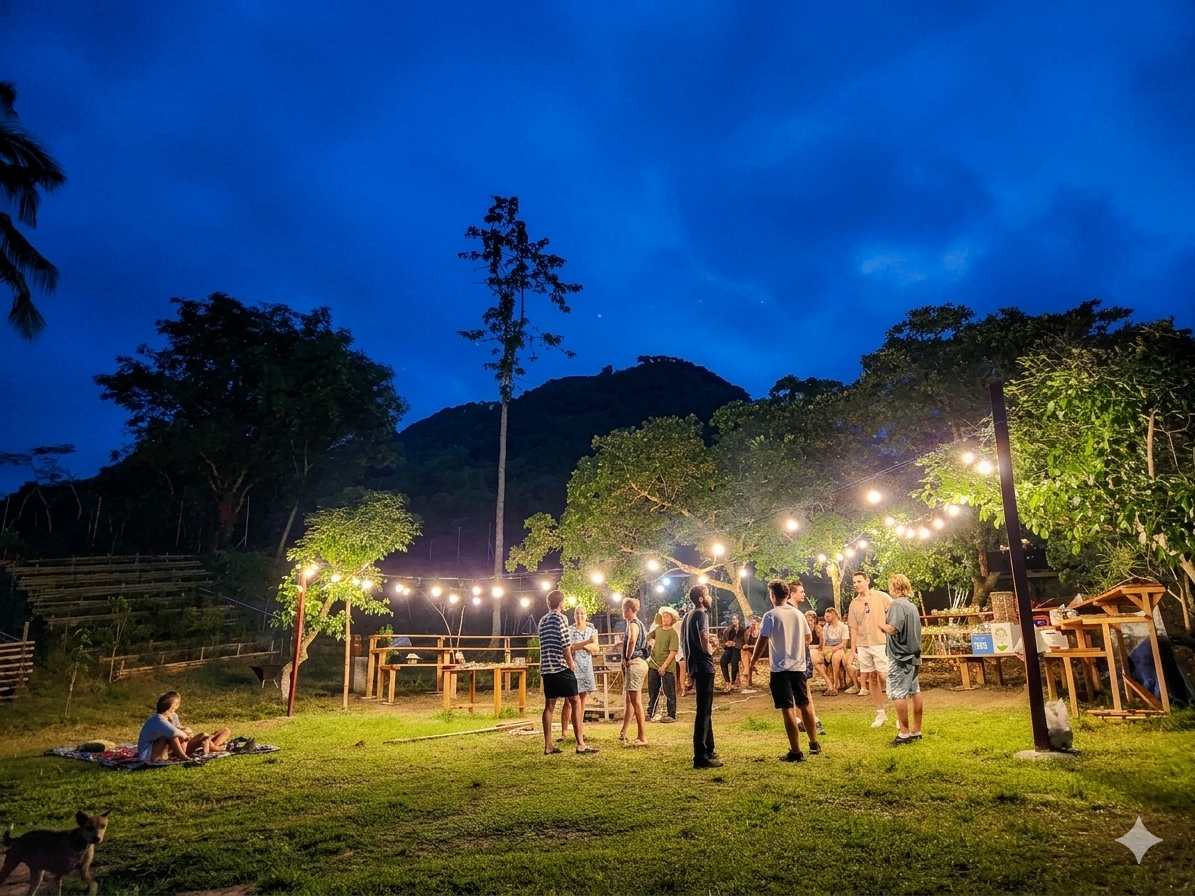
- Community gathering
- Day ends early
What You Can Participate In
Morning activities:
- Feed the goats (Coconut, Spinach, and friends)
- Collect eggs from the chickens
- Walk the gardens with our farmer
- Morning yoga on Heal Hill
Throughout the day:
- Cooking classes using farm ingredients
- Gardening and planting
- Learn about permaculture principles
- Rice field walks in the surrounding area
Evening:
- Friday BBQ community dinner
- Stargazing from the hilltop
- Conversation around the fire pit
Traditional Sasak Food
Staples
Nasi (Rice): The center of every meal. Lombok's rice paddies produce excellent grain.
Pelecing Kangkung: Water spinach in spicy tomato sauce — the signature Lombok dish
Ayam Taliwang: Grilled chicken with spicy sauce — Lombok's most famous dish
Sate Pusut: Minced meat satay wrapped around lemongrass
Plecing Terong: Eggplant in sambal
Where to Try Authentic Food
Local warungs: Family-run eateries serving home-style cooking
- Look for places with local customers
- Ask for recommendations from Sasak friends
- Expect to pay 15,000-35,000 IDR per dish
At Noni's Café: We incorporate Sasak flavors into our farm-to-table cooking
- Fresh ingredients from our gardens
- Traditional techniques, sometimes with modern touches
- Learn techniques in our cooking classes
Food Customs
- Eating with hands: Traditional (right hand only)
- Sharing: Food is typically served family-style
- Rice: Considered sacred; never waste rice
- Spice: Lombok = "chili pepper" in Javanese; the food is HOT
Ceremonies and Traditions
Nyongkolan (Wedding Parade)
If you're lucky, you might witness a Nyongkolan — a traditional wedding parade where the groom's family walks the couple through the village.
What to expect:
- Hundreds of participants in traditional dress
- Gamelan music and drums
- Dancing and celebration
- Sometimes blocks roads (join the joy, don't complain)
Bau Nyale (Sea Worm Festival)
Each February/March, thousands gather on South Lombok beaches for Bau Nyale — the annual sea worm harvesting.
What happens:
- Nyale sea worms appear once yearly for reproduction
- Sasak harvest them as delicacy and medicine
- Legend connects them to a princess who became the worms
- Major cultural celebration
Visiting during Bau Nyale:
- Dates vary (lunar calendar)
- Beaches get VERY crowded
- Incredible cultural experience
- Book accommodation far in advance
Gendang Beleq
Traditional Sasak drumming and dance, often performed at ceremonies and cultural events.
Where to see it:
- Cultural festivals
- Special ceremony events
- Occasionally arranged performances
- Ask at the farm if any are scheduled
Rice Paddy Culture
The Landscape That Defines Lombok
Rice terraces surround Mawun Valley Farm, creating the iconic Indonesian landscape. But these aren't just scenery — they're living agricultural systems following centuries-old patterns.
The rice cycle:
- Planting season: Wet season begins (November-December)
- Growing season: Fields flood green (January-March)
- Harvest season: Golden fields, community harvesting (April-May)
- Fallow period: Fields rest (June-October)
Experiencing Rice Culture
Rice field walks: Paths wind through the paddies, especially beautiful at sunrise/sunset
Watch planting or harvest: If you visit during these seasons, you might see community work
Respect the fields: Stay on paths, don't enter active paddies without permission
Experiencing Culture at Mawun Valley Farm
Our Connections
We don't perform culture for tourists — we live alongside Sasak neighbors and can facilitate genuine encounters:
- Tony, our farmer: Shares traditional agricultural knowledge
- Local artisans: We can arrange weaving demonstrations
- Cooking teachers: Learn Sasak dishes in our classes
- Ceremony invitations: Sometimes possible through local connections
Cultural Activities We Offer
- Learn traditional Sasak dishes
- Shop at local markets
- Cook with farm ingredients
- Understand food culture
- Traditional agriculture techniques
- Permaculture integration
- Animal husbandry
- Garden to table connection
Village visits:
- Arranged with local guides
- Respectful, informed experiences
- Support village economy directly
Tips for Cultural Engagement
Do:
- Learn a few Sasak/Indonesian words — "terima kasih" (thank you) goes far
- Accept hospitality — tea, food offers, conversation
- Dress modestly — especially in villages and religious sites
- Ask questions — people love sharing their culture
- Support local — buy crafts, hire guides, eat at warungs
Don't:
- Photograph without permission — especially in private moments
- Touch offerings or sacred objects
- Point with feet — considered very rude
- Rush interactions — Indonesian culture values relationship over transaction
- Assume you understand — ask, listen, learn
Plan Your Cultural Experience
Mawun Valley Farm offers the perfect base for cultural exploration:
- Location: Embedded in rural Sasak community
- Connections: Real relationships with local people
- Activities: Cooking classes, farm experiences, village visits
- Guidance: Help planning authentic encounters
Message Us on WhatsApp to plan your cultural immersion.
Related: Experience Program | Gather Program | Slow Travel Guide
Experience Mawun Valley
Book your stay and discover the magic for yourself.