Study Abroad Alternative in Indonesia: Experiential Learning Without the Price Tag
Traditional study abroad programs cost a fortune. A semester in Europe easily runs $15,000-30,000. Programs in Australia or New Zealand aren't much cheaper. Even Southeast Asian programs through universities charge premiums for administrative overhead and institutional margins.
But what if the actual learning — cultural immersion, personal growth, practical skills, perspective shift — could happen without the institutional price tag?
Indonesia offers exactly this possibility. Immersive farm programs provide experiential learning that equals or exceeds traditional study abroad outcomes, at 80-90% lower cost. For students priced out of conventional options, or simply questioning whether expensive programs deliver proportional value, these alternatives deserve serious consideration.
The Study Abroad Value Equation
Let's examine what traditional study abroad actually provides:
What You're Paying For
Tuition: Course credits transferring to home institutions Administration: Program coordination, visa assistance, emergency support Accommodation: Housing arranged and managed Cultural Programming: Organized excursions and activities Brand Association: The university name on your transcript
What Actually Transforms You
Research on study abroad outcomes consistently identifies these factors as most impactful:
Duration of Immersion: Longer stays correlate with greater growth Cultural Discomfort: Navigating unfamiliar situations builds capability Relationship Depth: Connections with locals and fellow participants Independence Required: Managing your own experience Practical Challenge: Solving real problems, not just observing
Notice the disconnect? The expensive components (courses, administration, brand) don't correlate with transformation. The transformative components (immersion, discomfort, relationships, independence, challenge) don't require institutional structures.
Experiential Learning Programs: An Alternative Framework
Experiential learning programs — including farm stays, skill-focused retreats, and community-based immersion — provide the transformative components directly.
How They Work
You join an existing operation (farm, school, community project) as a participating learner. You contribute to real work while developing skills and relationships. Duration varies from weeks to months based on your availability.
What You Gain
Cultural Immersion: Daily life alongside locals, not in student bubbles Practical Skills: Tangible capabilities, not just academic knowledge Personal Growth: Challenge, adaptation, self-discovery Relationships: Connections that survive your departure Independence: Managing your experience without institutional scaffolding
What You Don't Get
Academic Credits: Usually not transferable (though sometimes possible) Brand Name: No prestigious institution on your transcript Safety Net: Less administrative support than university programs Peer Cohort: Fewer fellow students from your country
For many students, the trade-off favors experiential programs — especially when cost differences are extreme.
Indonesia: The Ideal Alternative Destination
Among experiential learning destinations, Indonesia offers particular advantages:
Cost Structure
Daily costs for food, accommodation, and activities are among the world's lowest. Your budget stretches dramatically, enabling longer stays that correlate with better outcomes.
Cultural Accessibility
Indonesia welcomes foreigners while maintaining authentic culture. You can participate meaningfully without years of cultural study. English tourism infrastructure exists where needed while Indonesian language is accessible for those interested.
Visa Simplicity
Most nationalities receive 30-day visa-free entry, extendable to 60 days. For longer stays, various visa options exist. Compare this to visa complexity for Europe, Australia, or developed Asian countries.
Program Availability
Farm stays, community programs, and skill-focused retreats exist throughout Indonesia. Options range from highly structured to essentially independent, fitting different comfort levels and goals.
Safety and Infrastructure
Indonesia has sufficient tourism infrastructure for traveler safety without losing authenticity. Medical facilities, transportation, and communication systems work reliably.
Mawun Valley Farm: A Case Study
To make this concrete, consider how Mawun Valley Farm in Lombok functions as a study abroad alternative.
The Setting
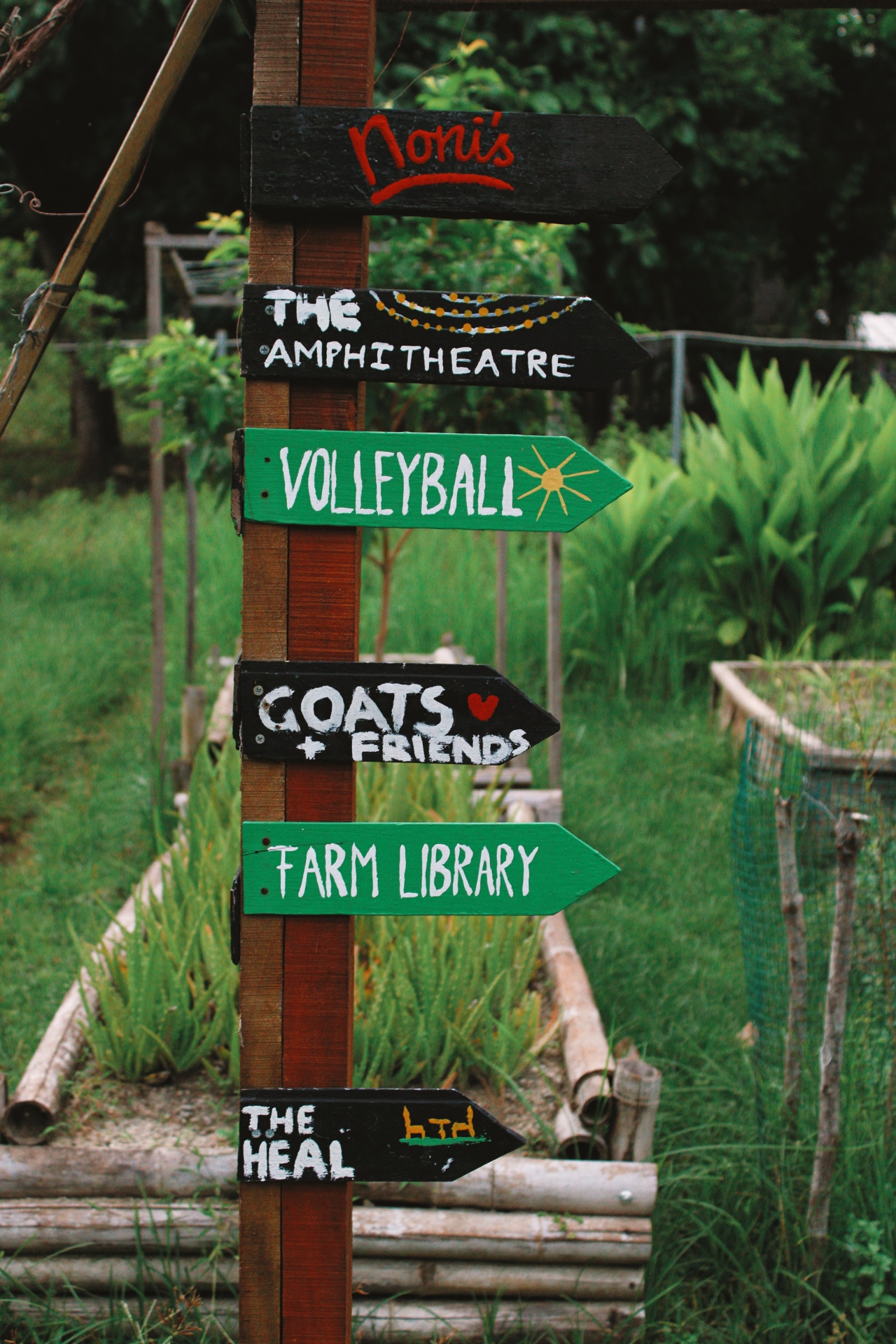
A working permaculture farm in South Lombok's hills, overlooking valleys and 3 minutes from world-class beaches. The property hosts participants from around the world learning sustainable agriculture, hospitality, construction, content creation, or simply experiencing slower life rhythms.
The Structure
Participants stay minimum 10 days (most stay 3-6 weeks). Each receives a private cabin, daily breakfast and lunch, access to all learning tracks, and participation in community events.
Five tracks offer different focuses:
- The Grower: Sustainable agriculture and permaculture
- The Caretaker: Animal care and guest hospitality
- The Maker: Construction and craftsmanship
- The Storyteller: Photography, video, and content creation
- Slow Living: Flexible participation, recovery-focused
Daily Life
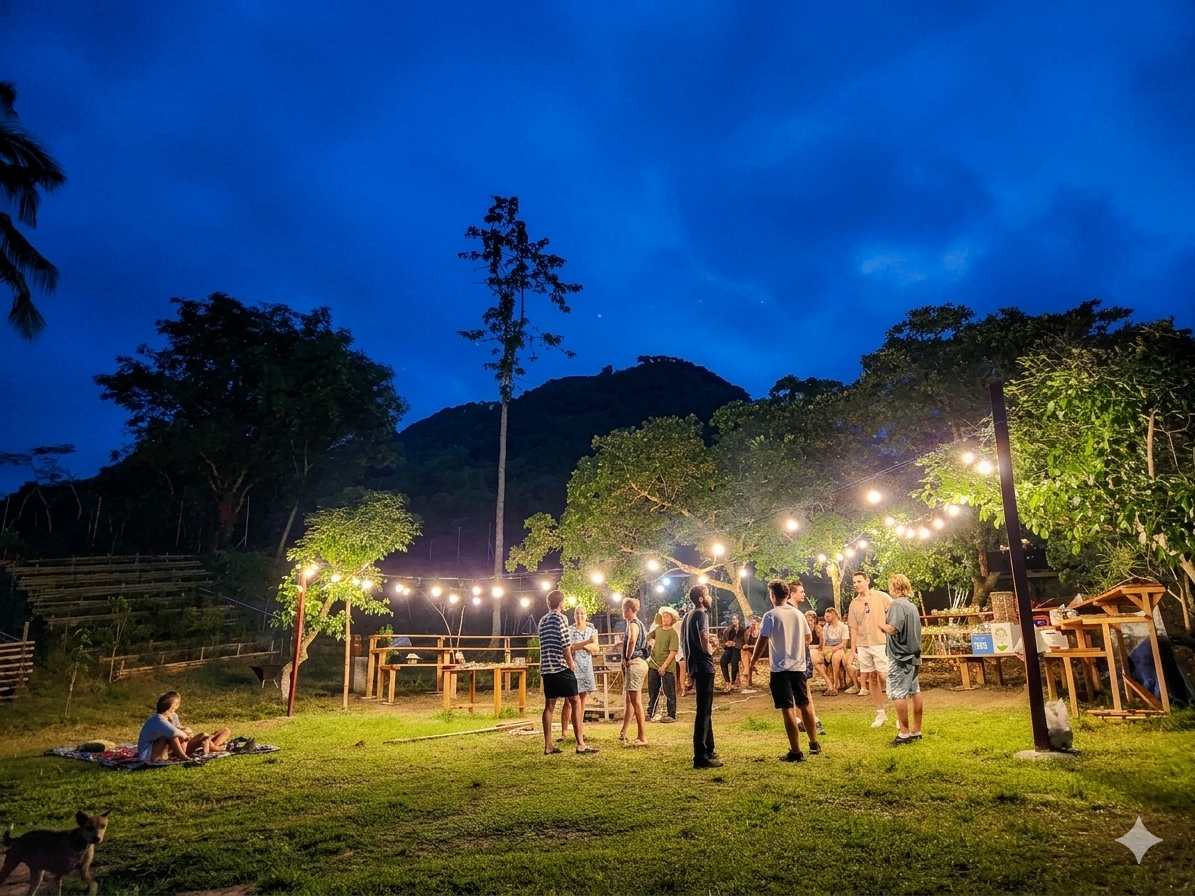
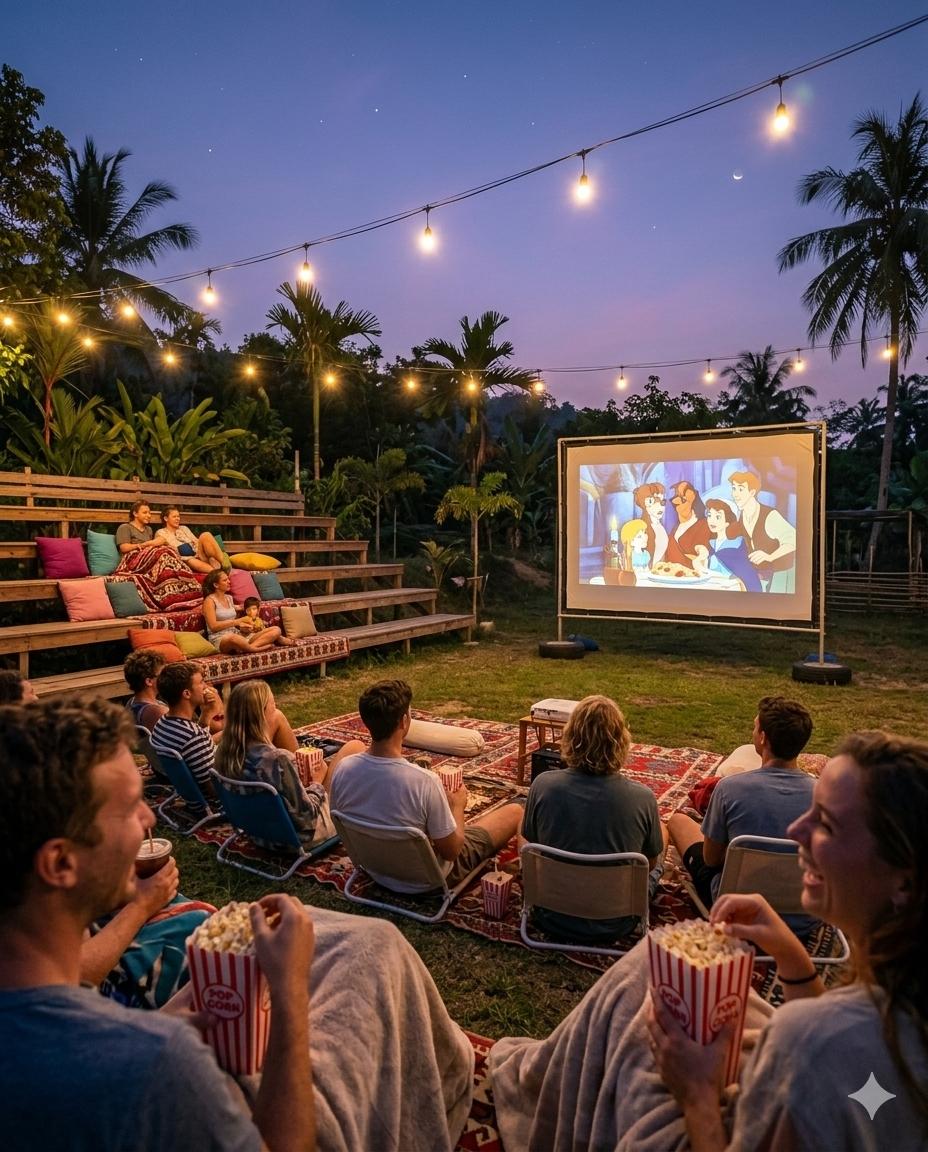
Mornings involve focused activities in your chosen track. Afternoons offer free exploration — nearby beaches, personal projects, remote work, rest. Evenings bring community — shared dinners, Friday BBQs, Wednesday cinema, Thursday volleyball.
The Community
Participants come from everywhere — Europe, Australia, Americas, Asia. International community forms naturally around shared meals and experiences. Staff become friends rather than service providers.
Cost Comparison: Traditional vs. Alternative
Let's compare a semester (4 months) of traditional study abroad versus intensive farm immersion:
Traditional Study Abroad (Europe/Australia)
| Component | Cost |
|---|---|
| Program tuition | $8,000-15,000 |
| Housing | $4,000-8,000 |
| Food | $2,000-4,000 |
| Travel/activities | $2,000-4,000 |
| Insurance | $500-1,000 |
| Flights | $1,000-2,000 |
| Total | $17,500-34,000 |
Two-Month Farm Immersion (Indonesia)
| Component | Cost |
|---|---|
| Program fee (€17 × 60 days) | €1,020 |
| Dinners/extras | $300 |
| Activities/exploration | $400 |
| Insurance | $200 |
| Flights | $800-1,200 |
| Total | $2,840-3,240 |
The farm option costs 10-15% of the traditional program while providing arguably superior immersion, practical skills, and personal challenge.
Even comparing shorter farm stays to shorter traditional programs, the cost advantage remains dramatic.
Learning Outcomes: What Research Says
Academic research on experiential learning supports alternative approaches:
Kolb's Experiential Learning Cycle
David Kolb's influential model posits that learning occurs through cycles of experience, reflection, conceptualization, and experimentation. Farm immersion naturally incorporates all four stages — you do, reflect, understand, and try again daily.
Transformative Learning Theory
Jack Mezirow's research identifies "disorienting dilemmas" as catalysts for perspective transformation. Immersion in unfamiliar cultural contexts provides exactly these catalysts — more reliably than studying abroad while insulated by institutional structures.
Skill Acquisition Research
Anders Ericsson's research on expertise development emphasizes deliberate practice in authentic contexts. Farm programs offer exactly this — real tasks with real consequences, not simulations or classroom exercises.
Intercultural Competence Development
Research consistently shows that intercultural competence develops through direct interaction, not proximity. Farm participants who work alongside Indonesian staff develop competence faster than students who study in institutional bubbles.
Addressing Common Concerns
Students considering alternatives often have legitimate questions:
"What About Academic Credits?"
Some universities accept experiential learning documentation for credit. Work with your academic advisor to explore options. Even without credit, the experience strengthens graduate school applications, which value demonstrated capability and initiative.
"Won't Employers Want Traditional Programs?"
Employers increasingly value demonstrated skills over institutional pedigrees. A portfolio showing content creation, a letter documenting hospitality responsibilities, or practical agricultural knowledge demonstrates capability that transcripts don't convey.
"Is It Safe Without Institutional Support?"
Modern communication means help is never far. Travel insurance covers medical emergencies. The farm community provides immediate support. Many participants find this manageable independence more empowering than institutional dependence.
"Will My Parents Accept This?"
Frame it clearly: "I'm choosing immersive cultural experience and practical skill development over expensive coursework that provides similar learning outcomes at much higher cost." Specific program information helps parents understand what you're doing.
"What If Something Goes Wrong?"
Something will go wrong — that's part of learning. The question is whether you want institutional handlers or personal resourcefulness to respond. Most situations resolve more effectively (and educationally) through direct engagement.
Who Thrives in Alternative Programs
Based on experience with farm participants, certain profiles flourish:
Self-Directed Learners
Without syllabi and grades, you direct your own learning. Those who set personal goals and pursue them thrive.
Comfort-Zone Exiters
If you're seeking challenge rather than comfort, alternatives deliver. Those wanting cultural experience without cultural discomfort may prefer traditional programs.
Practical Over Theoretical
If you learn by doing rather than reading, farm immersion suits better than classroom study.
Budget-Conscious Students
If traditional programs are financially unrealistic, alternatives open possibilities otherwise closed.
Gap-Year Candidates
For students not pursuing immediate academic credit, alternatives provide experience without pretending to be university.
Career Explorers
Those uncertain about career direction find farm exposure clarifying. You discover what you actually enjoy doing.
Building Your Alternative Experience
If alternatives appeal, here's how to proceed:
Research Thoroughly
Explore options beyond Mawun Valley. Indonesia has numerous farm stays and experiential programs. Find fits for your interests and goals.
Plan Duration Thoughtfully
Longer stays correlate with better outcomes. If possible, invest 4-8 weeks rather than rushing through.
Document Everything
Without institutional validation, self-documentation matters. Keep journals, photograph work, collect testimonials.
Prepare Academically
If seeking credit, work with advisors beforehand. Define learning objectives they'll recognize.
Manage Expectations
Alternative programs require more self-direction. Be prepared to create your own structure.
Apply Early
Popular programs fill ahead. Don't assume last-minute availability.
Participant Perspectives
Previous participants reflect on their alternative choices:
"Staying at Mawun Valley Farm was an incredible experience. Fully immersed in nature and local life. The peaceful environment helped me disconnect and reset." — Iyad, Tunisia (40 days)
"We spent 1 month here and couldn't be more happy. There's a strong sense of community. The meals were really good, the BBQ nights were delicious." — Mariana, Portugal (1 month)
"Mawun Valley is an incredible place that gives everyone a place in the community. Everything is to be created with the host as an inspired and caring conductor." — Alexa, France (2 weeks)
Your Education, Your Choice
Traditional study abroad has its place. For students with resources, institutional risk tolerance, and academic credit requirements, conventional programs serve legitimate purposes.
But they're not the only path — and they're not necessarily the best path for actual learning and growth.
Indonesia offers genuine alternatives. Mawun Valley Farm provides one example of experiential learning that rivals traditional outcomes at a fraction of the cost.
Your international experience doesn't require institutional intermediaries. Sometimes the best education happens when you step away from educational structures entirely.
Consider the alternative. It might be exactly what you're looking for.
Interested in experiential learning as a study abroad alternative? Visit our Stay & Contribute page to explore program options. Your transformative experience can begin whenever you're ready — no application deadlines, no prerequisites, no institutional barriers.
Experience Mawun Valley
Book your stay and discover the magic for yourself.