
The irony of modern parenting: we moved to paradise, and our kids still want screens. South Lombok offers beaches, farms, adventures, and wildlife — yet the pull of devices remains powerful.
This isn't a failure. It's biology meeting technology designed by geniuses to capture attention. The good news? Real-world activities can compete, especially here. The key is understanding what screens provide (stimulation, novelty, social connection, mastery) and offering alternatives that deliver the same rewards — better.
Understanding the Screen Pull
What Screens Provide
Before we can replace screens, we need to understand what they're offering:
Instant stimulation: No boredom, no waiting, constant novelty Sense of mastery: Games provide clear progress, achievement Social connection: Friends are online, communication is easy Escape: From boredom, discomfort, difficult emotions Habit: The brain learns to reach for screens automatically
What Screens Cost
Attention fragmentation: Difficulty focusing on single tasks Physical stagnation: Bodies need movement Sleep disruption: Blue light and stimulation affect rest Emotional regulation: Screens become the only coping tool Real-world disconnection: Missing what's actually around them
The Goal
Not screen elimination (impractical) but screen balance — enough real-world engagement that screens become one option among many, not the default.
Active Adventures
Beach Activities
South Lombok's beaches are free, accessible, and endlessly engaging:
Building:
- Sandcastles, forts, channels, dams
- Collect shells and coral for decoration
- Build "villages" with natural materials
- Dig to "Australia"
Water play:
- Swimming (obvious, but kids need encouragement)
- Wave jumping
- Floating and diving
- Rock pool exploration
Games:
- Beach football, frisbee, cricket
- Relay races on sand
- Tag variations
- Buried treasure hunts
Exploration:
- Shell collecting (great for classification and counting)
- Creature finding (crabs, fish, starfish)
- Tide watching (science in action)
- Different beaches = different discoveries
Pro tip: Bring other kids. Every beach activity becomes more engaging with friends.
Farm and Animal Experiences
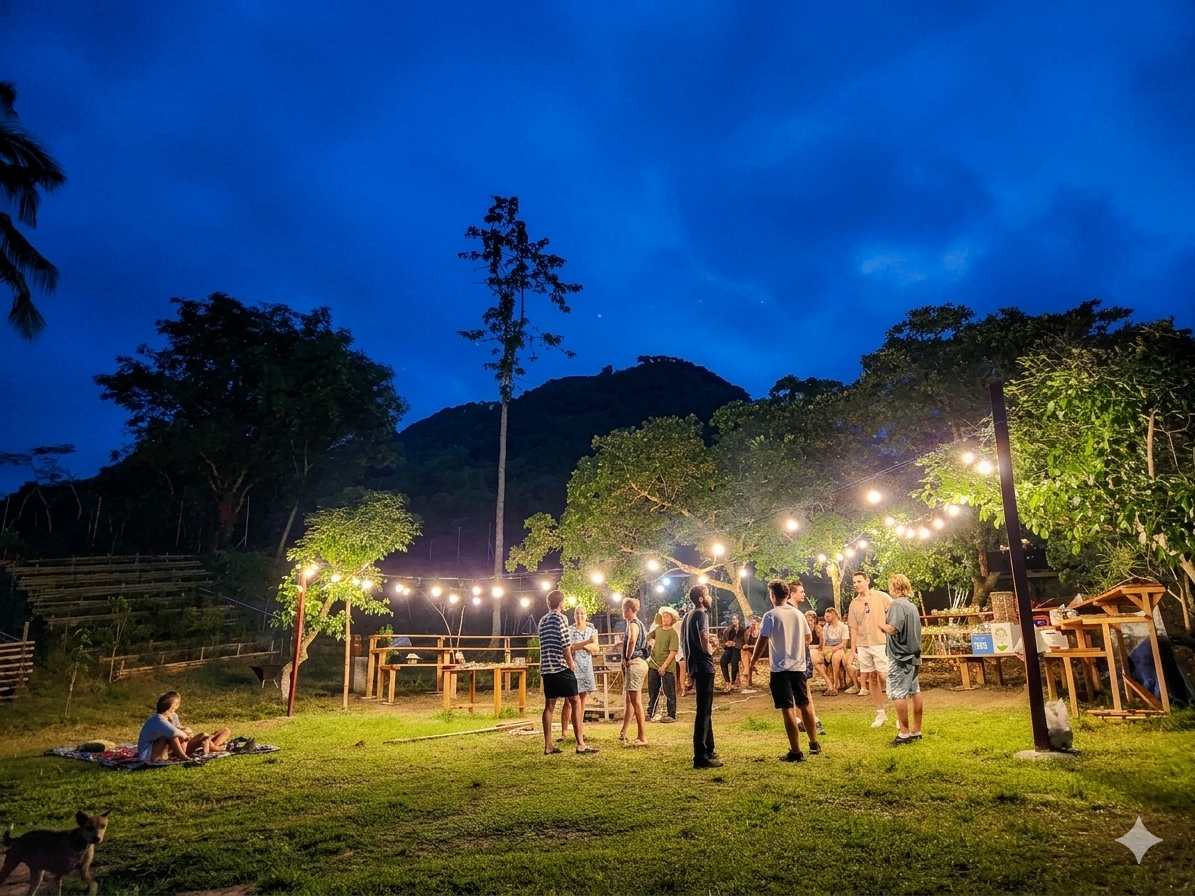
Mawun Valley Farm and similar environments offer screen-free gold:
Animal interaction:
- Feed the goats (instant connection)
- Collect eggs from chickens
- Observe animal behavior (endless fascination)
- Help with animal care
Growing things:
- Plant seeds and track growth
- Harvest vegetables
- Learn what's edible
- Composting and soil science
Farm work:
- Age-appropriate tasks build capability and pride
- Watering, weeding, mulching
- Building and fixing things
- Tool use (supervised)
Little Roots includes farm activities weekly, giving children regular connection to land and animals.
Water Adventures
Beyond beach swimming:
Surf lessons:
- Physical challenge and mastery
- Connection with ocean
- Clear progression (like games, but real)
- Social activity with other learners
Waterfall trips:
- Marcopolo and other accessible falls
- Hiking + swimming = full engagement
- Natural adventure feeling
Snorkeling:
- Underwater world = better than any screen
- Marine life observation
- Swimming skill development
Creative Activities
Building and Making
Children crave mastery. Making things provides this:
Woodworking:
- Simple projects: boats, bird feeders, frames
- Real tools (supervised)
- Tangible results they can keep
- Skills that transfer to other building
At Little Roots, woodworking is part of the monthly rotation. Kids make real things with real tools.
Crafts:
- Natural materials: shells, sticks, leaves
- Clay and sculpting
- Weaving (traditional Sasak craft)
- Painting and drawing (outdoors when possible)
Construction:
- Fort building (the ultimate project)
- Obstacle courses
- Garden structures
- Anything with cardboard and tape
Cooking and Food
Kitchen activities engage multiple senses and teach practical skills:
Simple cooking:
- Fruit salads (knife skills + creativity)
- Smoothies (measuring + blending)
- Baking (chemistry + patience)
- Traditional Indonesian dishes
From garden to plate:
- Harvest ingredients
- Wash and prepare
- Cook together
- Eat what you made
Snack preparation:
- Children can prepare their own snacks
- Builds independence
- Reduces "I'm hungry" interruptions
Social Screen-Free Time
Organized Programs
Little Roots at Mawun Valley Farm:
- Every Wednesday, 9 AM - 12 PM
- Ages 6-7, same 6 children
- Sports, activities, farm time, creativity
- Zero screens, 100% engagement
- Real friendships with consistent peers
Surf schools:
- Group lessons provide social time
- Shared challenge builds bonds
- No devices in the water
Sports:
- Football games
- Beach volleyball
- Any group physical activity
Informal Play Dates
Structure matters for screen-free success:
Choose active contexts:
- Beach (screens don't work well in sand/water)
- Farm or garden
- Sports area
- Anywhere devices are impractical
Plan initial activities:
- Have a starting game or project
- Children often just need a launch point
- Once engaged, they'll continue themselves
Manage the transition:
- "We're doing X" not "No screens"
- Focus on what's happening, not what's forbidden
Daily Rhythm
Morning Foundations
Start screen-free:
- Physical activity first (beach, walk, play)
- Breakfast without devices
- Sets tone for the day
Outdoor priority:
- Get outside before screens are possible
- Harder to want screens after active morning
- Cooler hours in tropics anyway
Creating Structure
Children fight screens less when days have predictable rhythm:
Example daily flow:
- 6:30-8:00: Outdoor time + breakfast
- 8:00-10:00: Learning/projects
- 10:00-12:00: Play (ideally with others)
- 12:00-1:00: Lunch
- 1:00-3:00: Rest + limited screen time (contained)
- 3:00-6:00: Activities, beach, or program
- 6:00: Dinner + evening wind down
The key: Screen time is one predictable slot, not the default filler for all boredom.
Managing Transitions
The hardest moments are transitions (waiting, travel, between activities). Strategies:
Car rides:
- Music, podcasts, or audiobooks
- Car games (I Spy, 20 Questions)
- Accept some boredom (it's okay)
Waiting:
- Small toys or fidgets
- Drawing supplies
- Observation games
Boredom:
- Allow some (it sparks creativity)
- Offer one suggestion, then step back
- Don't rescue immediately with screens
Screen-Free Zones and Times
Physical Zones
Outdoors: Default no screens outside Dining areas: Meals are for eating and talking Bedrooms: Sleep space is device-free
Time Zones
Morning: First 1-2 hours screen-free Meals: No devices at table Before bed: 1 hour before sleep, screens off Social time: When friends are over, screens down
Making It Stick
Model it: Your phone habits matter Be consistent: Rules don't work if they're flexible Make alternatives available: Have supplies, not just rules Expect resistance: It fades with time Celebrate engagement: Notice when kids are happily occupied offline
When Screens Are Fine
Balance, not elimination. Screens aren't evil. They're fine for:
Rest periods: Hot afternoon, post-activity rest Sick days: When children genuinely need quiet rest Travel: Long journeys with no alternatives Educational content: Documentaries, learning apps (limited) Video calls: Connecting with distant family
The test: Is this a choice among options, or the only option? Is screen time enhancing life or replacing it?
South Lombok Advantages
Nature Access
You live in paradise. Use it:
- Beach within minutes
- Farms to visit
- Hills to explore
- Wildlife everywhere
Community
Little Roots and similar programs provide:
- Consistent peer interaction
- Adult-facilitated activities
- Screen-free social time
- Weekly rhythm
Culture
Local life is inherently low-screen:
- Village activities
- Traditional crafts
- Outdoor lifestyle
- Different relationship with technology
Slower Pace
Less rushing = more time for real engagement. You're not shuttling between scheduled activities. Space exists for organic play.
Start Small
Don't overhaul everything at once. Small changes:
Week 1: Screen-free mornings Week 2: Add screen-free meals Week 3: Establish outdoor daily ritual Week 4: Add one weekly social/activity commitment
Each change becomes normal before the next one starts.
Resources and Programs
Weekly Programming
- Every Wednesday at Mawun Valley Farm
- 9 AM - 12 PM, ages 6-7
- Sports, creativity, farm, nature
- 3-month commitment, same kids
- Learn more →
Farm Visits
- Mawun Valley Farm welcomes families
- Animal interaction, garden exploration
- Real environment, not entertainment
Beach Programs
- Surf schools (Selong Belanak area)
- Swimming lessons
- Beach clean-up events
The Long Game
Children raised with balanced screen use develop:
- Ability to entertain themselves
- Comfort with boredom (the birthplace of creativity)
- Physical capability and body awareness
- Social skills with real people
- Connection to place and environment
- Attention span for sustained effort
These aren't just nice childhood outcomes. They're essential adult capabilities.
South Lombok offers an unusual opportunity: an environment where screen alternatives are genuinely compelling. The beach really is more interesting than most apps. Farm animals really do fascinate. Friends really are more fun in person.
The hard part isn't finding alternatives. It's breaking habits and establishing new rhythms. But it's possible, and your children will thank you — eventually, after they stop complaining.
Want weekly screen-free social time for your child? Little Roots meets every Wednesday. Learn more →
Related: Little Roots Program | Outdoor Education Benefits | Family Activities
Experience Mawun Valley
Book your stay and discover the magic for yourself.