Gap Year in Indonesia: Why Farm Life in Lombok Beats Backpacking
You've decided to take a gap year. Maybe you're between high school and university, or taking a break mid-degree, or simply pausing before the next chapter begins. Indonesia is on your list — it should be. But here's the question nobody asks enough: what kind of gap year do you actually want?
Most gap year travelers follow the backpacker circuit: Bali temples, Gili Islands parties, maybe a volcano sunrise or two. They move every few days, collect Instagram shots, and return home with thousands of photos but surprisingly few stories that go deeper than "it was amazing."
There's another way. One that involves staying somewhere long enough to actually learn, to build relationships that survive your departure, to develop skills you'll use forever. It happens on farms, in small communities, in places where travelers become temporary residents rather than perpetual tourists.
This guide makes the case for farm-based gap year experiences in Indonesia — specifically why Lombok's farm stays might give you more than months of hostel-hopping ever could.
The Backpacker Gap Year vs. The Immersive Gap Year
Let's compare honestly what each approach offers.
The Typical Backpacker Experience
Movement: New place every 3-5 days. Constant packing, planning, navigating.
Accommodation: Dorms with rotating strangers. Privacy is rare.
Food: Restaurant meals, often "Western" food because it's easier.
Social life: Friendships form fast but rarely last. You're always saying goodbye.
Learning: Surface-level cultural exposure. Language stays at "terima kasih" (thank you).
Daily routine: Wake, eat, sightsee, photograph, sleep, repeat.
Budget impact: Transportation costs add up. Every move has a price.
Return home with: Photos, souvenirs, stories of places you saw.
The Farm Immersion Experience
Movement: One base for weeks or months. Deep familiarity with one place.
Accommodation: Private cabin, your own space.
Food: Communal meals with farm-fresh ingredients. Learning local cuisine.
Social life: Genuine friendships with hosts, staff, other participants. Long-term connections.
Learning: Hands-on skills (farming, cooking, building, content creation). Real language progress.
Daily routine: Purposeful activities, free time, natural rhythms.
Budget impact: All-inclusive daily rate. No transport costs or surprise expenses.
Return home with: Skills, portfolio pieces, relationships, genuine cultural understanding.
Neither is objectively "better" — they serve different goals. But if your gap year is about growth rather than just travel, the immersive approach delivers more.
Why Indonesia for Your Gap Year
Indonesia earns its place on gap year itineraries for good reasons.
Affordability That Enables Long Stays
Your gap year budget stretches dramatically in Indonesia. Quality food, accommodation, and experiences cost a fraction of Western prices. Where $1,500 might last two weeks in Europe, it funds six weeks or more in Indonesia.
This affordability unlocks the possibility of actually staying somewhere. You can afford to go deep rather than wide.
English Is Workable, But Indonesian Is Learnable
While English tourism infrastructure exists, Indonesia rewards language effort more than most destinations. Indonesian is famously accessible for English speakers — no tones, Latin alphabet, logical grammar. A month of immersion can leave you genuinely conversational.
This combination means you can function immediately but have room to grow.
Cultural Richness Beyond Beaches
Indonesia's 17,000+ islands host hundreds of ethnic groups, languages, and traditions. The cultural depth is inexhaustible. A gap year could explore only Indonesian cultures and never run out of new experiences.
Lombok specifically offers Sasak culture — distinct from Balinese Hinduism — with Islamic traditions, weaving heritage, and agricultural rhythms largely unchanged for generations.
Natural Beauty That Doesn't Require Filters
Beaches, volcanoes, rice terraces, waterfalls, coral reefs — Indonesia's natural beauty is legitimately world-class. Your photos will look good without enhancement because the source material is extraordinary.
Practical Infrastructure
Unlike truly remote destinations, Indonesia has reliable transport, communication, healthcare, and banking. Adventure is accessible without genuine danger or overwhelming logistics.
What Farm Life Actually Looks Like
At Mawun Valley Farm in South Lombok, gap year participants join a working permaculture operation. Here's what that means practically:
Your Accommodation
Private cabin with queen bed, outdoor shower, and porch views. Not a dorm bed — your own space. Simple but comfortable, surrounded by tropical gardens.
Your Daily Food
Breakfast and lunch included daily. Farm-fresh ingredients prepared communally. Friday BBQ nights with fresh seafood. Sunday dinners you might help cook.
Your Activities
Choose a focus track or explore everything:
- The Grower: Learn sustainable agriculture through doing it. Planting, harvesting, composting, understanding tropical food systems.
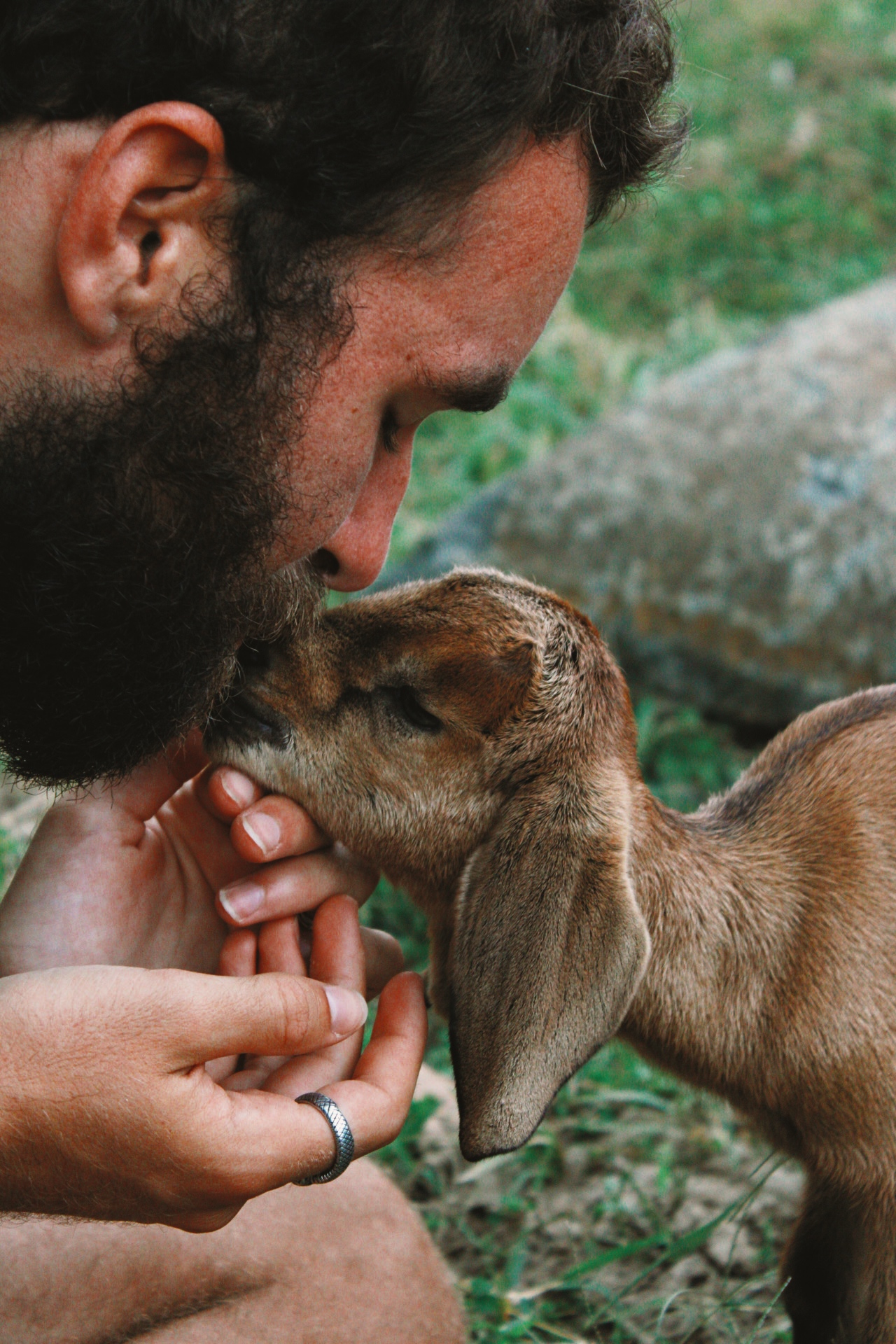
- The Caretaker: Morning routines with goats, chickens, ducks. Kitchen assistance. Guest hospitality. Community building.
- The Maker: Construction projects, carpentry, creative building. Leave something physical behind.
- The Storyteller: Photography, video, writing. Content creation with stunning subjects.
- Slow Living: No expectations. Participate when called, rest when needed. Recover from burnout.
Your Community
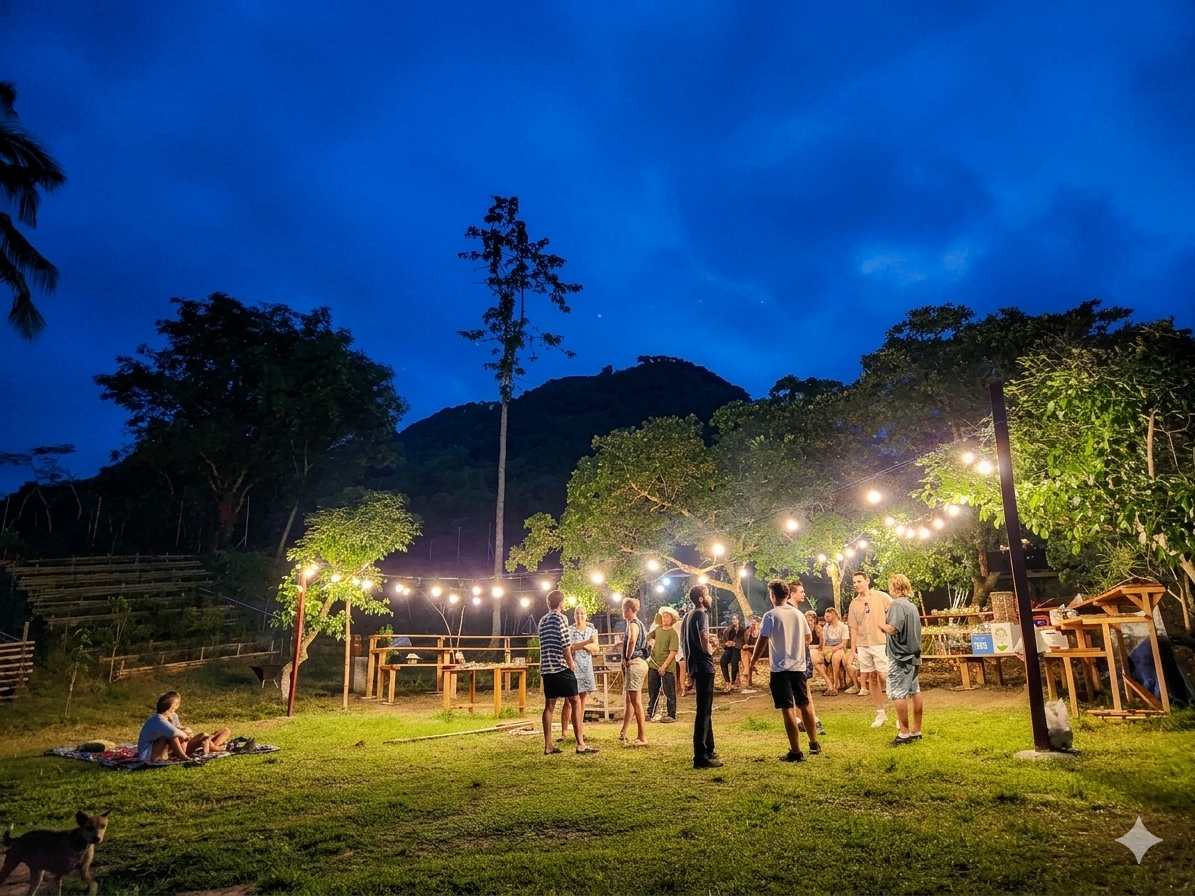
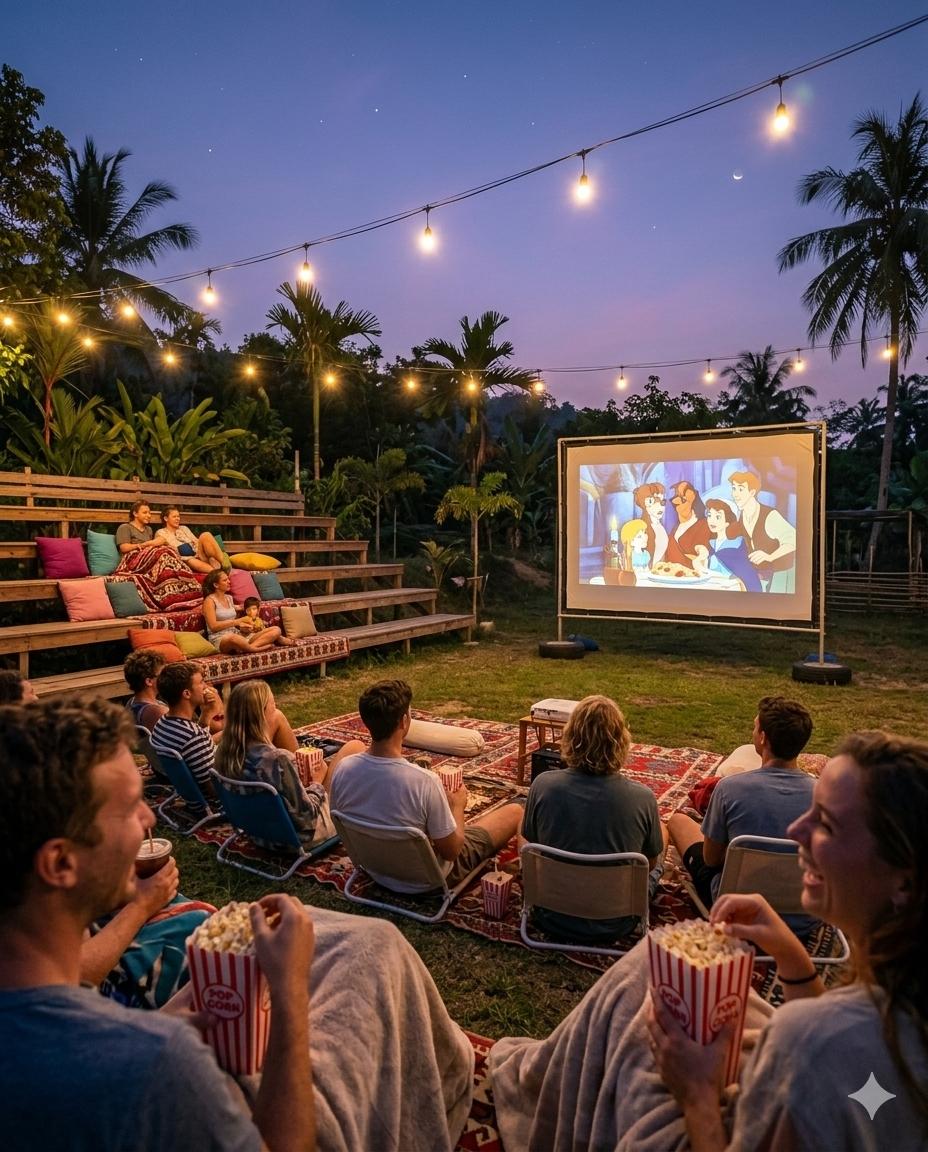
Other participants from around the world. Permanent staff who become friends. Local neighbors who share village life. BBQ nights and movie screenings. Thursday volleyball.
Your Free Time
Mawun Beach is 3 minutes away. Surf breaks within 15 minutes. Restaurants and nightlife in Kuta Lombok town (10 minutes). Waterfalls, hikes, and adventures on day trips.
Skills You'll Gain (That Actually Matter)
Backpacking teaches logistics and adaptability. Farm immersion teaches these plus genuinely marketable skills:
Agricultural Knowledge
Understanding sustainable food production isn't just idealistic — it's increasingly relevant as climate change reshapes how we grow food. Basic permaculture knowledge has practical applications in dozens of career paths.
Hospitality Experience
Working in a farm-stay teaches guest relations, event management, and the soft skills of making strangers comfortable. These transfer to any customer-facing role.
Content Creation
With photogenic subjects, good lighting, and time to practice, gap year participants often leave with portfolios. Photography improves when you're shooting daily in beautiful settings.
Construction & Making
Building something physical — even simple furniture or repairs — teaches problem-solving and satisfaction in tangible outcomes. These skills translate to DIY capability for life.
Indonesian Language
Daily immersion with Indonesian staff accelerates language learning beyond any classroom. Conversational Indonesian opens doors throughout Southeast Asia's largest economy.
Self-Knowledge
Perhaps most importantly, time in a different rhythm reveals what matters to you. Career clarity often emerges from gap year experience — you learn what you actually enjoy doing.
Comparing Costs: Farm Stay vs. Backpacking
Let's do real math for a month in Indonesia:
Backpacker Budget (Conservative)
| Expense | Daily | Monthly |
|---|---|---|
| Dorm bed | $8 | $240 |
| Food (basic) | $15 | $450 |
| Transport (average) | $5 | $150 |
| Activities/entry fees | $10 | $300 |
| Total | $38 | $1,140 |
This assumes budget choices throughout. Many backpackers spend more.
Farm Stay Budget
| Expense | Daily | Monthly |
|---|---|---|
| Program fee (all-inclusive) | €17 | €510 |
| Dinners (not included) | $5 | $150 |
| Personal extras | $10 | $300 |
| Total | $34 | $1,020 |
The farm stay costs less while providing private accommodation, better food, structured learning, and community. The comparison favors immersion financially as well as experientially.
Who Chooses Farm Gap Years
Based on participants at Mawun Valley Farm, certain profiles gravitate toward this experience:
The Pre-University Student
Taking a year before starting degree programs, seeking clarity on interests and direction. Farm experience helps discover passions (or eliminate options) before committing to majors.
The Mid-Degree Pauser
Burned out from academic pressure, seeking reset before final years. Time on a farm reconnects with physical reality after too much screen time.
The Recent Graduate
Uncertain about career paths, seeking experience different from office internships. Farm stays offer thinking space while building practical skills.
The Career Changer
Not traditional gap year age, but taking time between professional chapters. Farm immersion provides perspective on what matters.
The Burned-Out Professional
Taking sabbatical after intense work periods. Farm rhythms restore energy without pressure to perform or achieve.
Testimonials from Gap Year Participants
"Staying at Mawun Valley Farm was an incredible experience. Fully immersed in nature and local life. The peaceful environment helped me disconnect and reset. If you're a surfer, this place is a hidden gem." — Iyad, Tunisia (40 days)
"Mawun Valley is an incredible place that gives everyone a place in the community. Everything is to be created with the host as an inspired and caring conductor." — Alexa, France (2 weeks)
"Ten days on the farm 🐐🐓🌾 Learning Indonesian, learning about sustainability, animals, and nature. Trying new things like riding a motorbike or surfing, hiking mountains, getting blisters on my hands, feeding goats, meeting beautiful people… Just nature. The best detox ever." — Sara, Spain (10 days)
Planning Your Farm Gap Year
Ideal Duration
Minimum stay is 10 days, but for genuine gap year experience:
- 3-4 weeks: Solid introduction, real skill development
- 1-2 months: Deep immersion, language progress, lasting relationships
- 3+ months: Transformative experience, potential ongoing involvement
Best Time to Visit
Indonesia's dry season (April-October) offers the most reliable weather. However, the farm operates year-round, and "rainy season" usually means afternoon showers rather than constant rain.
What to Bring
- Comfortable clothes for tropical heat and physical activity
- One pair of closed-toe shoes for farm work
- Laptop if needed for remote work or content creation
- Camera gear if pursuing Storyteller track
- Open mind and willingness to try things
Visa Considerations
Most nationalities receive 30-day visa-free entry, extendable to 60 days. For longer gap years, research visa options for your nationality. Many participants do multiple visits across Southeast Asia, returning to the farm as a base.
Combining with Travel
Farm stays complement (rather than replace) broader travel. Common patterns:
- Start with farm immersion, then travel lighter
- Travel first, end gap year with grounding farm experience
- Use farm as home base for regional exploration
Beyond the Gap Year: What Participants Do Next
The question isn't just what you do during the gap year but how it shapes what comes after. Farm participants frequently report:
Career Clarity
Time away from normal life reveals what actually matters. Many participants change academic or career directions based on gap year realizations.
Portfolio Pieces
Content creators return with tangible work samples. Farm photography, videos, and writing demonstrate capabilities to future employers or clients.
Ongoing Connections
Relationships formed over weeks don't evaporate like hostel friendships. Participants stay in touch, sometimes return, occasionally collaborate professionally.
Changed Priorities
Experiencing simpler, community-oriented life shifts what participants seek afterward. Less status-chasing, more meaning-seeking.
Language Skills
Conversational Indonesian opens professional doors throughout Southeast Asia's largest economy. Even basic proficiency signals cultural competence.
Your Gap Year, Your Rules
There's no wrong way to take a gap year. Backpacking delivers real value for the right person with the right goals.
But if you're seeking growth over ground covered, relationships over photos, skills over stamps in your passport — consider the farm.
Indonesia awaits. Lombok offers everything Bali has, minus the crowds. Mawun Valley Farm provides structure without rigidity, community without obligation, learning without lectures.
Your gap year can be different. Better different.
Ready to explore farm-based gap year experience in Indonesia? Visit our Stay & Contribute page to see program tracks and apply. We welcome travelers of all ages seeking genuine immersion over surface tourism.
Experience Mawun Valley
Book your stay and discover the magic for yourself.