Farm Life in Indonesia: What a Day Really Looks Like on a Working Farm
There's something romantic about the idea of farm life in Indonesia — waking with the sun, tending gardens, eating food you've grown yourself, surrounded by tropical beauty. But what's it actually like? Not the Instagram version, but the real daily rhythm of life on a working Indonesian farm?
At Mawun Valley Farm in South Lombok, we've welcomed hundreds of guests curious about exactly this question. Some stay a night. Some stay a month. All leave with a different understanding of what farm life in Indonesia actually means.
This is an honest look at what a day on our farm really looks like.
Before Dawn: The Farm Wakes Up
5:00 AM — The Roosters' Announcement
You will wake up early. This isn't optional. Indonesian roosters don't believe in sleep-ins, and our collection of chickens begins their morning chorus well before the sun appears.
At first, this can feel jarring — especially if you've arrived from a city where 7 AM felt early. But something shifts after a few days. You start waking naturally just before the roosters, your body adjusting to the farm's rhythm.
The pre-dawn hour is actually magical. The air is cool (relatively — this is still the tropics), the world is quiet except for the animals, and the sky shifts through colors that most people never see because they're sleeping through them.
5:30 AM — First Animal Care
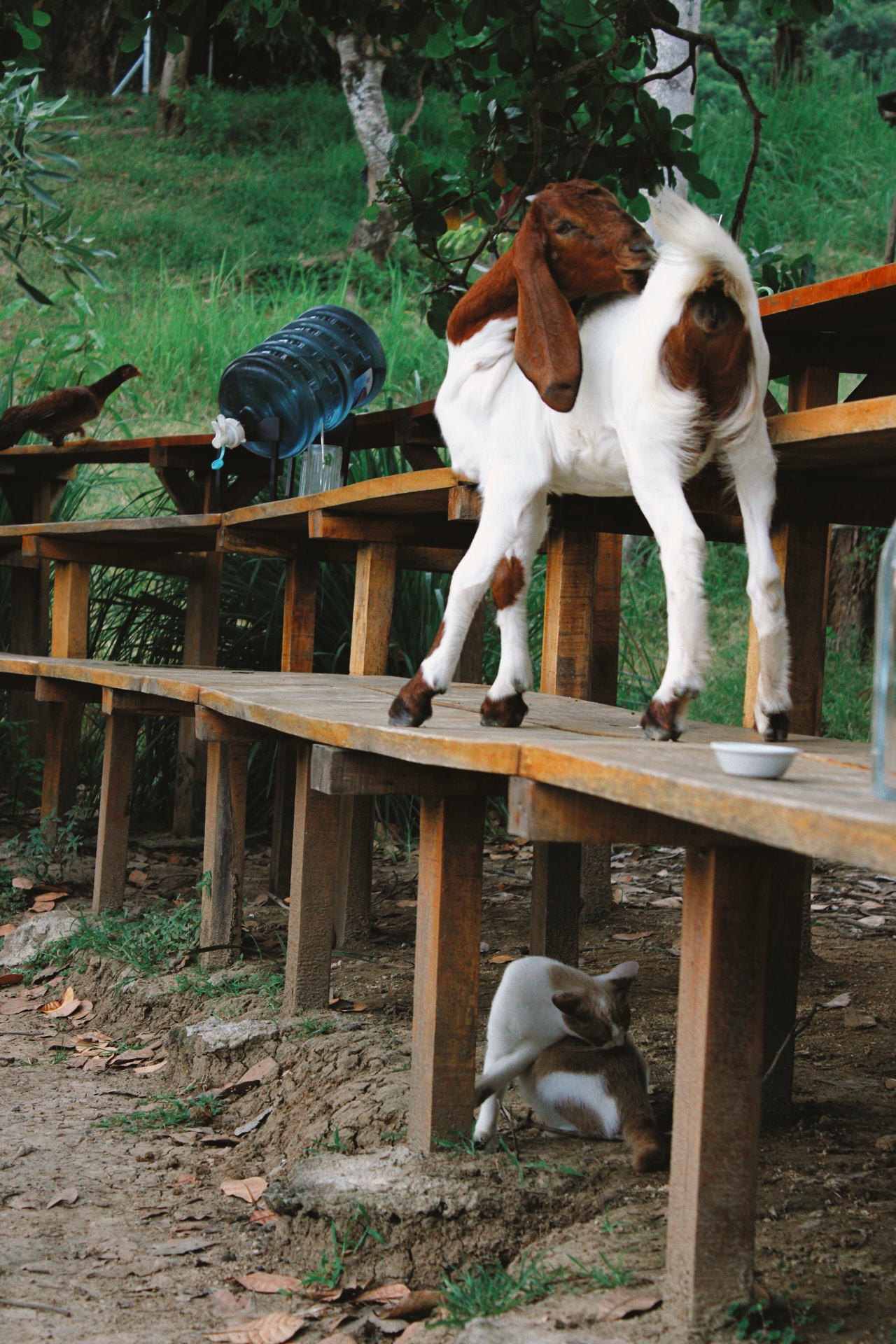
The goats are hungry. Coconut, Spinach, Kangkung, and the rest of the herd have been waiting patiently (or not so patiently) for breakfast. Someone needs to cut fresh grass and leaves for them.
This is often when guests who want to participate in farm life join in. There's something meditative about walking the property in the early morning, selecting the right vegetation, carrying armfuls back to eager goats who recognize you after a few days and call out in greeting.
The chickens need fresh water and feed. Eggs need collecting from the coop — a small treasure hunt that never gets old, even after weeks. Some days you find eight eggs; some days you find three. The chickens keep their own schedule.
6:00 AM — Garden Rounds
The vegetable gardens require daily attention in a tropical climate. This isn't like temperate gardening where you can skip a few days. Plants grow fast, pests move faster, and irrigation needs constant monitoring.
Morning rounds involve:
- Checking for pest damage overnight
- Watering what needs water
- Harvesting ripe produce for today's meals
- Noting what needs attention later
- Simply observing — noticing what's thriving and what's struggling
For guests interested in learning, these rounds become informal lessons in tropical permaculture. What companion plants work here? Why are the tomatoes in partial shade? How do you deal with that particular bug without chemicals?
Morning: When the Work Happens
7:00 AM — Breakfast at Noni's
Farm work makes you hungry, and Noni's Farm Café opens early. Breakfast features whatever's fresh — eggs from our chickens, vegetables from the garden, fruit from our trees.
The café becomes a gathering point. Guests share plans for the day. Staff discuss what needs doing. Someone mentions they're heading to Selong Belanak to surf; someone else asks about the hiking trail they discovered yesterday.
This isn't a hotel where you eat in isolation. Farm life in Indonesia means community, and mealtimes are where community happens.
8:00 AM — The Working Morning
The productive hours on an Indonesian farm are morning hours. By noon, the heat makes intensive physical work impractical. So the period from 8 AM to noon is when real work happens.
What this might include:
Garden work: Planting, weeding, building new beds, repairing irrigation, mulching. There's always something to do in a permaculture system — it's a living thing that needs constant attention.
Construction and maintenance: Fences need repair. Paths need clearing. New projects — a shade structure, an expanded chicken run, a compost system — are always in progress.
Animal care: Beyond feeding, animals need health checks, grooming, their areas cleaned. Goats need their hooves trimmed periodically. Chickens need their coop maintained.
Harvest and processing: During fruiting seasons, there's produce to pick, clean, and prepare. Our cashew harvest (August-December) is particularly intensive.
Learning and teaching: Guests who stay longer often get involved in projects, learning skills they'll carry with them — composting, seed saving, natural pest management, tropical plant care.
11:00 AM — Slowing Down
As the sun climbs, the pace shifts. Heavy work winds down. People drift toward shade, cold drinks, perhaps a shower.
This isn't laziness — it's intelligence. Working through the midday heat in the tropics is exhausting and potentially dangerous. Indonesian farm culture has always recognized this, building rest into the daily rhythm.
Afternoon: The Quiet Hours
12:00 PM — Lunch and Rest
Lunch at Noni's is lighter than dinner but still satisfying. Fresh salads, rice dishes, whatever the garden provided that morning.
After lunch, the farm enters its quietest phase. Many people nap — a luxury that feels indulgent at first and essential after a few days. Others read, write, catch up on the outside world (yes, there's wifi).
Some guests use this time to explore. The beach at Mawun is a five-minute drive. Selong Belanak is fifteen minutes. But many find they're content to simply be still, watching the farm's afternoon rhythms from a hammock.
3:00 PM — Second Wind
As the heat begins to break, activity gradually resumes. Gardens that looked overwhelming at noon now feel manageable. Animals need their evening check. Small projects that were abandoned at 11 AM get completed.
This is often when cooking preparations begin. At Noni's, vegetables are chopped, sauces started, bread set to rise. Farm-to-table dining requires actual prep time when you're starting with whole ingredients.
4:00 PM — Golden Hour Activities
The late afternoon is when many of the farm's social activities happen.
Thursday volleyball: Our weekly sunset volleyball games bring together guests, locals, and expats for casual play on the grass court.
Farm tours: New arrivals often get their orientation during these cooler hours.
Skill sharing: Impromptu lessons in whatever someone knows — maybe a guest is teaching Indonesian to other guests, or a local staff member is demonstrating traditional weaving.
Simply being present: Walking the property as the light turns golden, watching the goats settle in for the evening, picking herbs for dinner.
Evening: Community Time
6:00 PM — Sunset
Lombok sunsets are legendary, and the farm's hillside position offers unobstructed views. People gather naturally — on the café terrace, on the grass, wherever the view is best.
There's no formal sunset ritual. People just stop what they're doing and watch. Conversation continues but often trails off as the colors intensify. It's a daily reminder of why you chose to be on a farm in Indonesia instead of in an office somewhere.
7:00 PM — Dinner
Evening meals at Noni's are the day's main event. Farm-fresh ingredients become Indonesian dishes — gado-gado, nasi goreng, sate, fresh-caught fish, vegetable curries.
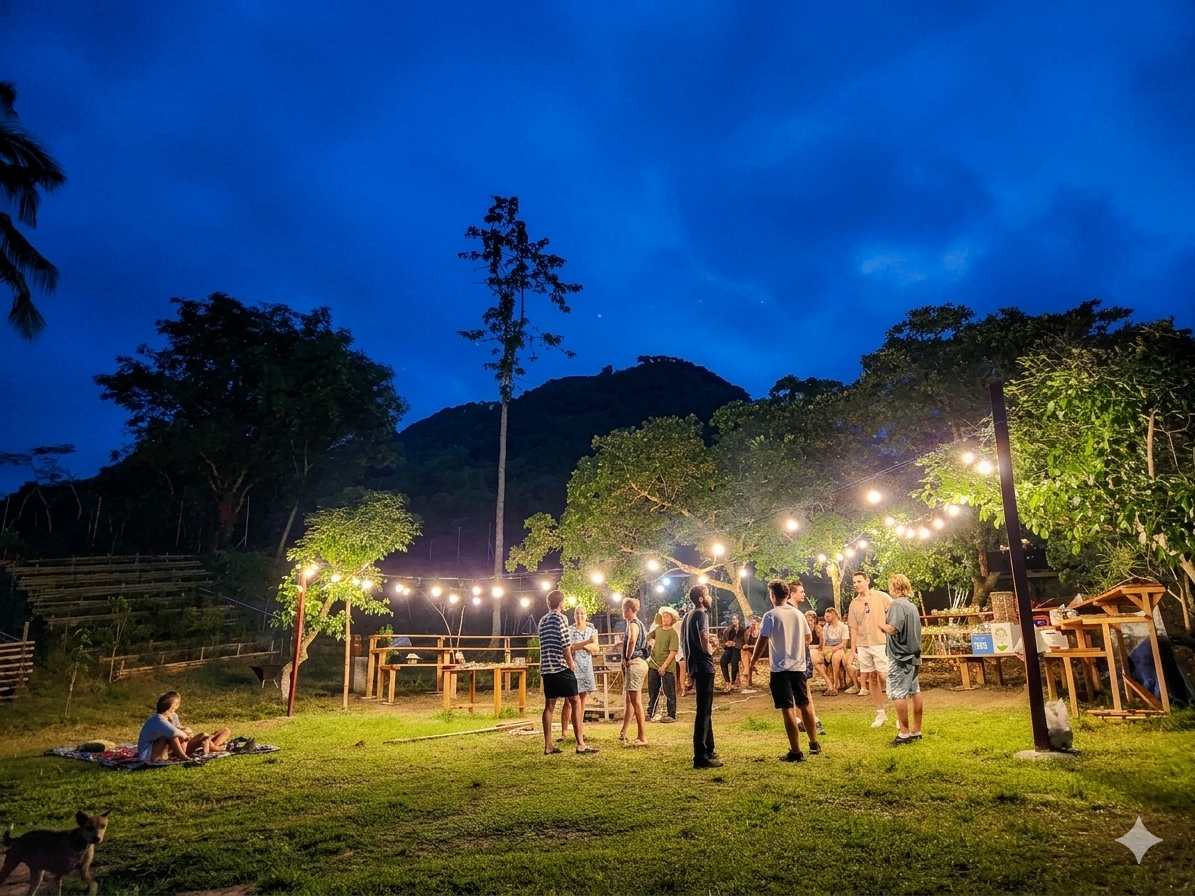
The communal tables mean you eat with whoever's around. First-night guests sit next to month-long residents. Stories get exchanged. Tips get shared. Friendships form over sambal and cold Bintangs.
Friday BBQ nights are particularly special — the grill comes out, the atmosphere turns festive, and the farm becomes a gathering place for the wider community.
9:00 PM — Night Falling
Farm time is not party time. Without the energy of a city, evenings wind down early. The darkness is genuine darkness — minimal light pollution means stars you've never seen.
Some people stay up talking. Some walk the property under moonlight. Many are in bed by 9:30, genuinely tired from a day of physical activity and fresh air, genuinely ready for sleep.
And tomorrow, the roosters will announce dawn again, and the cycle continues.
What Surprised Guests Most
After welcoming thousands of visitors, patterns emerge in what people find unexpected about farm life in Indonesia:
The Pace
Many arrive expecting either constant busyness or total relaxation. The reality is neither — it's rhythmic. Intense morning activity, quiet afternoons, social evenings. The farm doesn't match the productivity-obsessed schedule of modern life or the aimlessness of pure vacation. It has its own tempo.
The Simplicity
Life on the farm isn't complicated. Wake up, tend animals, grow food, eat together, rest, repeat. After the complexity of modern life — constant decisions, endless options, information overload — this simplicity feels radical.
The Connection
To the land: You become aware of weather, seasons, what's growing. To animals: Individual goats have personalities; chickens recognize you. To people: Shared work and shared meals create bonds faster than normal social life.
The Satisfaction
There's something deeply satisfying about physical work that produces visible results. Weeding a garden bed, feeding animals, harvesting vegetables — these tasks have clear beginnings and endings. The modern world is full of abstract work that never quite finishes. Farm work is concrete and completable.
Different Lengths of Stay
Your experience of farm life depends partly on how long you stay:
A Few Nights
You'll get a taste — the rhythms, the food, the atmosphere. You'll wake with roosters, eat farm-fresh meals, maybe feed the goats once. It's enough to understand the appeal but not enough to fully relax into it.
A Week
The farm's rhythm becomes your rhythm. You stop checking your phone constantly. You know the animals by name. You have a favorite spot for sunset watching. You've learned something — maybe about composting, maybe about yourself.
A Month or More
Now you're not a guest; you're part of the place. You're involved in ongoing projects. You've seen what changes week to week. You understand the seasons. You've formed real relationships.
For those considering extended stays, we offer Stay & Contribute arrangements — reduced rates for guests who want to participate more fully in farm life. It's not for everyone, but for the right person, it's transformative.
Is Farm Life in Indonesia for You?
This life isn't for everyone. You won't enjoy it if you:
- Need constant entertainment
- Struggle without air conditioning
- Can't handle early mornings
- Require five-star amenities
- Dislike animals or getting dirty
You might love it if you:
- Value authentic experiences over comfort
- Want to learn practical skills
- Enjoy physical work
- Seek genuine community
- Need a break from digital overload
- Are curious about sustainable living
Experience It Yourself
Reading about farm life is one thing. Living it, even briefly, is something else entirely. It might confirm that rural life isn't for you — that's a valuable discovery too. Or it might awaken something you didn't know was sleeping.
We welcome guests for any length of stay. A single night gives you a taste. A week gives you immersion. A month or more through our Stay & Contribute program gives you transformation.
The roosters will wake you either way. What you do with the day that follows is up to you.
Contact us on WhatsApp to ask questions or check availability.
Related reading: Slow Travel Lombok Guide • Permaculture at Mawun Valley
Frequently Asked Questions
What time do you wake up on an Indonesian farm?
Early! Roosters start around 5 AM, and farm work typically begins by 6 AM to take advantage of cooler morning temperatures. Most people adjust within a few days.
Do I need farming experience?
Not at all. Most guests have never worked on a farm before. Everything is learned through observation and participation. We're happy to teach anyone who's interested.
What kind of work is involved?
Daily activities include animal feeding, garden maintenance (watering, weeding, harvesting), and general farm tasks. Work is physical but not grueling — typically 3-4 hours in the morning.
Is farm life in Indonesia suitable for vegetarians/vegans?
Yes! Farm-to-table eating actually makes plant-based diets easier. Our gardens produce abundant vegetables, and the café offers vegetarian options daily.
What's the accommodation like on a working farm?
Simple but comfortable. At Mawun Valley Farm, we offer private rooms and cabins with fans, mosquito nets, and private bathrooms. It's not luxury, but it's cozy and clean.
Can I combine farm life with beach activities?
Absolutely! We're only 5 minutes from Mawun Beach and 15 minutes from Selong Belanak. Many guests spend mornings on the farm and afternoons at the beach.

Experience Mawun Valley
Book your stay and discover the magic for yourself.